Showing posts with label Top 50 Albums of All Time. Show all posts

Sunday, July 06, 2014

Top 50 Albums of All Time, #22 - "Who's Next" (1971)

I've got quite a history with this album.

At one time in my life, I might have ranked it up in the top ten.  At another time, it wouldn't have made the list at all.  So what happened?

Let's start at the beginning.  Spring of 1974, I'm wrapping up 8th grade, and hanging out at a friend's house after school.  His brother plops the album on the turntable, and the first song coming out of the speakers is "Getting in Tune."  It's the second side, followed by "Going Mobile," "Behind Blue Eyes" and the epic "Won't Get Fooled Again."  I'm hooked - and it's almost as if a new world has opened up.  Looking back now, it was probably the first "pantheon album" that I'd ever heard - what most objective observers would call the best album from a band considered to be one of best ever.

Fast forward to the fall of 1980 - my first quarter at Berkeley, during that time when you're trying to figure out the right balance between freedom (I can do anything I want, any time I want!) and responsibility (Oh yeah, there's that whole study and do well on your grades thing still hanging overhead).  Trying to get used to a bunch of people from different backgrounds, with different tastes and different whims.  And, perhaps most importantly to someone like myself, with different musical tastes.

So at any given point during my two years in the dorms, that might have meant the guy who went in for folk-era Dylan, or the guy who was into Eno's ambient music, or the young lady who went more for the hardcore stuff (X, Flipper), or in one particular instance, the guy who owned two albums and played them at length, nearly every day - one of them being "Who's Next" (the other was Todd Rundgren's "Something/Anything," which at least had the virtue of being a double album).  What I learned in that one nine-month period is that there are no albums that can withstand that amount of playing - not even an album as great as "Who's Next."  It was nearly 20 years before I could listen to it again.

Once I made peace with it, there could be no question that this was one of the greatest albums ever recorded; the prototype of what would now be considered the classic "classic rock" album.  From the majestic opening of "Baba O'Riley," to the perfect Roger Daltrey vocals, to the outright beauty of some of the music ("The Song Is Over," "Behind Blue Eyes"), to the humor of John Entwistle's "My Wife," and to what was probably the last great drumming of Keith Moon's career - it's damn near perfect.

Give it another 10 years, and it may wind its way all the back to the top ten.

Sunday, June 22, 2014

Top 50 Albums of All Time, #23: "Automatic for the People," R.E.M. (1992)

R.E.M.'s career went through a number of distinct phases.  Their first three albums established them as the world's favorite indie critics' band, even as Michael Stipe's enunciation issues and oddball lyrics made them almost impossible to understand.  Around the time of "Fables of the Reconstruction," I remember telling a good friend from my college days that I wasn't even sure if I liked them that much.

And then, BOOM.  On "Life's Rich Pageant" they hired John Mellencamp's producer, turned up the mikes on Bill Berry's drum set, and all of a sudden Michael Stipe decided to stop mumbling.  Some critics called it a sell-out (or even worse, a betrayal), but I thought it was their best album to date.  This trend continued with "Document," which was even better, and "Green," which was almost that good.

But it was after that, in the early to mid-1990s, that the band hit their creative peak.  During that time they issued four consecutive albums falling somewhere between "classic" and "masterpiece," and one of the reasons it's taken so long to restart this project is that I really wanted to avoid the cop out of selecting all four, like I did with Talking Heads.  After listening to all four albums quite a bit, it came down to a choice between "Out of Time" (which should probably be somewhere on this list, but call it near the top of the next tier) and "Automatic for the People," which were released within about a year of each other.

It's the latter album that gets the nod.  Interestingly, the worst song is the first, "Drive," and even it is pretty good.  But it's the six songs that anchor the record - all among their best, featuring some of the most beautiful music they ever wrote - that push it over the top.  I'm talking about "Try Not to Breathe," "Everybody Hurts," "Sweetness Follows," "Man on the Moon," "Nightswimming," and "Find the River."  That's half the album right there, and if I was putting together a tape representing the best of their career, I'd be hard pressed to leave any of those off.

These are not happy songs - just check these lyrics from "Try Not to Breathe:"

I will try not to breathe.
I can hold my head still with my hands at my knees.
These eyes are the eyes of the old, shiver and fold.
I will try not to breathe.
This decision is mine. I have lived a full life
And these are the eyes that I want you to remember. Oh.

I need something to fly over my grave again.
I need something to breathe.
I will try not to burden you.
I can hold these inside. I will hold my breath
Until all these shivers subside,
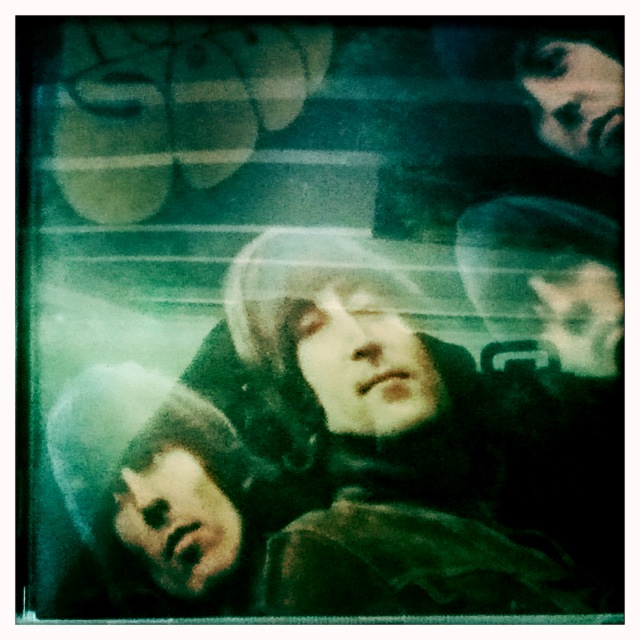
Just look in my eyes.


The meaning behind those lyrics has been talked about for more than two decades now, to the point where the discussion has its own page on Metafilter.  Clearly the song is about death, but the brilliance of the writing is that you can't pin down the circumstances.  I've always felt it was about someone dying of AIDs, but that's not necessarily the case.  

And these from "Everybody Hurts:"

Sometimes everything is wrong
Now it's time to sing along
When your day is night alone (Hold on, hold on)
If you feel like letting go (Hold on)
If you think you've had too much
Of this life, well hang on

Everybody hurts
Take comfort in your friends
Everybody hurts
Don't throw your hand, oh no


I'm not sure what Michael Stipe was going through at that time of his life, but he clearly had a lot on his mind.  But it's best to remember R.E.M. as a band, because their work together was definitely greater than the sum of each individual part.  Nearly every song they recorded was credited to the entire band, and the music they created together was at times so beautiful - gorgeous melodies and vocals - that you sometimes forgot that it was a lot more than Stipe and three sidemen.  So here's to Peter Buck, Mike Mills and Bill Berry.  You were all a great band.

Monday, February 18, 2013

Top 50 Albums of All Time, #24 - Talking Heads, 1977-80

OK, so I'm cheating with this one.  But it's my list, right? 

After several weeks of trying to nitpick the differences between the Talking Heads' first four albums, I've reached the conclusion that to take any one of them out of the context of what the band accomplished in the late 1970s would be a mistake.  Each one of the albums has its own distinct identity, but together they form a cohesive whole, and paint a picture of a band that over the course of a four-year period, figured out exactly what it wanted to do, and achieved it with spectacular results.

Listening to the debut album, Talking Heads '77, is what it feels like to read the first book by a great novelist.  All the pieces are there - the talent, the musicianship, the songwriting - all that it lacks is a sympathetic editor who can pull all of those pieces together and help the artist realize their potential and their vision.

With More Songs About Buildings and Food, the band found that editor in producer Brian Eno. As Robert Christgau wrote at the time, Eno and the Heads were the ideal producer-artist collaboration, and you can hear his contributions in the record's every groove.  If anything was lacking on the debut, it was a sense of sound - and love him or hate him, one thing that Brian Eno can do very well is create a distinctive sound.  Where the music on the debut sounded a little flat, on the sophomore effort it is full and distinctive.

On Fear of Music, David Byrne the songwriter and the band as musicians went in a completely different direction, but one that was no less successful.  Even more than "Psycho Killer," the songs on Fear of Music were insular, jittery and sometimes even a little scary (just listen to "Animals" and "Drugs," next time you have a chance).  At the time it came out, I remember telling a classmate that it should have been called "Dance Music for Neurotics."  Christgau didn't like it quite as much, but Lester Bangs loved it even more - which probably tells you everything you need to know.

And even with all that - three great albums, all critically acclaimed, and even a radio hit with a definitive cover of Al Green's "Take Me to the River" - little the band had done before (with the possible exception of "I Zimbra" on Fear of Music) was sufficient to prepare one for the epic soundscapes of Remain in Light.  I freely admit that I didn't get it at first, giving it a listen and wondering what the hell had happened - yes, I could hear David Byrne's voice in there, but this was so far outside the "Talking Heads mold" that it was a little off-putting (and besides, "The River" came out on the very same day, and it was such a rich feast that there was little time left for anything else).

It was only when I saw the Heads in concert - the first tour with the "expanding band" concept that would become legendary a few years later with the release of "Stop Making Sense" - that everything began to click.  What seemed expansive just two years earlier now seemed downright tame, as the band and Eno took the music well beyond the boundaries of punk or new wave, or whatever you wanted to call it, and created something that, to these ears, was unique.

The band would go on, without Eno, to record two more excellent albums, but nothing would ever quite match the excitement and the innovation of the first four.  But even if their career had ended in 1980, their election to the Hall of Fame would have been secure. 

Sunday, February 10, 2013

Top 50 Albums of all Time, #25 - "American IV: The Man Comes Around," Johnny Cash

And so we finally break the Top 25, and from here on out every selection will be an existential crisis, as I argue with myself on whether I have this or that album rated too low, too high, or whatever.  But from this point on, we're talking degrees of magnificence.  There really isn't much to choose between these records, and depending upon the day or my mood, I might rank them differently (with the exception of those at the very top).

"What gave me the idea I could and should produce Johnny Cash?"  In his house in the Hollywood Hills, sun squeezing through the stained glass windows, Rick Rubin is sitting cross-legged and shoeless on a sofa almost the size of Johnny's favorite room.  One black dog lolls on his back, next to him.  "There's no good answer to that; it just felt like the right thing to do.  I'd been thinking about who was really great but not making really great records; what great artists are not in a great place right now.  And Johnny was the first and the greatest that came to mind.  A unique character, kind of his own force of nature.  Someone who doesn't fit into any guidelines - whatever he does it's always, well, Johnny Cash - and who didn't seem inspired to be doing his best work right now." - liner notes, Cash Unearthed, by Sylvie Simmons

"The Man Comes Around" was the fourth Johnny Cash album produced by Rick Rubin, and the last released before Cash's death in September 2003.  That May, Cash had lost his dear and beloved wife June Carter Cash, and it's not much a stretch to imagine that as he and Rubin were recording the album in 2001 and 2002, that death was not far from his mind.  The album is a valediction - Cash confronting his own mortality through a series of songs steeped in death and pain ("Hurt," "I Hung My Head," "Sam Hall," "Streets of Laredo"), sending his eternal love to June ("First Time Ever I Saw Your Face"), and wondering aloud what might await on the other side ("The Man Comes Around," "We'll Meet Again"). 

"It was hard work.  I spent a lot of time on that song, "The Man Comes Around" - weeks and weeks writing and working the lyrics around to the way they are.  I was trying for something special.  It went through all sorts of changes.  I'd written it as a poem - I haven't written many poems before, but that's how it came out - based loosely on the Book of Revelation in the Bible, and I would go from one interpretation to another on this very complicated interpretation - or to me it's very complicated - until I finally found some lyrics that worked.  I probably have 40 or 50 verses that I wrote that I didn't use."  - Johnny Cash, liner notes, Cash Unearthed

There is an early version of "The Man Who Comes Around" on "Unearthed," and it is instructive to listen to the two versions back-to-back.  The first is primarily Cash on acoustic guitar with what I would call a pretty standard country music backing.  The song is undeniable, but on that version there is a clear disconnect between the power of the lyrics and the music, which doesn't rise to the occasion.  And that is where Rubin came in - because the structure of the song on "American IV" is part of what makes the song so frightening.  There's the spoken intro, coming in as if from another world, and then the unmistakable lead-in to the song, sung in almost staccato fashion:

There's a man going around taking names
And he decides who to free and who to blame
Everybody won't be treated all the same
There will be a golden ladder reaching down
When the man comes around

Clearly, not everyone will get to use that golden ladder.   This is a truly frightening song, real end-of-the-world stuff - and likely indicative of the things that were running through Cash's mind at the time.

"Usually when I send Johnny songs it's with no real pitch, just "Listen to them and see what ones you like."  But I do remember saying when I sent him Nine Inch Nails' "Hurt," "I think this particular song is  really special one.  I feel like the words have a lot of power and with you singing them it's really going to take on a whole new light." - Rick Rubin, liner notes, Cash Unearthed

I've told this story before, but it bears repeating.  The first time I heard "Hurt," I was doing something that I've done dozens of times in my life - spending my lunch hour wandering around The Beat, the great downtown Sacramento record store that is one of the few remaining bastions of independence in the industry.  Like they often do, they had a number of albums on the CD player on shuffle, so the songs weren't coming up in any particular order.  The first "American IV" song I heard that day was "Tear Stained Letter," and I remember thinking "wow, that really sounds awesome."  A few other songs went by, and then all of sudden there was "Hurt."  And I stood there in front of the speaker, goose bumps running up and down my entire body, totally transfixed by what I was hearing.

If the album consisted of just those two songs, that would probably be enough.  But in addition to the great songs already mentioned above, Cash turns in great performances of several classic standards, including "Bridge Over Troubled Water," "In My Life," "Desperado," "Danny Boy," and "I'm So Lonesome I Could Cry," as well as his own take on "Personal Jesus" and a new version of his old song "Give My Love to Rose."

It's a great album, and a fitting testament to a great, great artist.

American IV: The Man Comes Around
Produced by Rick Rubin

The Man Comes Around/Hurt/Give My Love to Rose/Bridge Over Troubled Water/I Hung My Head/First Time Ever I Saw Your Face/Personal Jesus/In My Life/Sam Hall/Danny Boy/Desperado/I'm So Lonesome I Could Cry/Tear Stained Letter/Streets of Laredo/We'll Meet Again


Sunday, January 20, 2013

#26-50 of the Top 50 Albums of All Time

We're halfway through, so a recap seems to be in order.

You can find all of the individual reviews here.

26.  Pretzel Logic, Steely Dan
27.  Late for the Sky, Jackson Browne
28.  Rubber Soul, The Beatles
29. Songs for Swingin' Lovers, Frank Sinatra
30.  Dig Me Out, Sleater-Kinney
31.  Kiko, Los Lobos
32. Rust Never Sleeps, Neil Young & Crazy Horse
33.  Horses, Patti Smith
34.  The Joshua Tree, U2
35.  Rumours, Fleetwood Mac
36.  Peter Gabriel (1980)
37.  August and Everything After, Counting Crows
38.  Tie: Siren and Avalon, Roxy Music
39.  Rocket to Russia, The Ramones
40.  Making Movies, Dire Straits
41.  Black Cadillac, Rosanne Cash
42.  Graceland, Paul Simon
43.  Car Wheels on a Gravel Road, Lucinda Williams
44.  Life'll Kill Ya, Warren Zevon
45.  Decoration Day, Drive-By Truckers
46.  Actually, Pet Shop Boys
47.  Captain Fantastic and the Brown Dirt Cowboy, Elton John
48.  Los Angeles, X
49.  Madonna
50.  Some Girls, The Rolling Stones

That's not a bad list, if I do say so myself.

Saturday, January 12, 2013

Top 50 Albums All Time, #26 - "Pretzel Logic," Steely Dan

For a while now, I've gone back and forth on the question of whether to select one Steely Dan album in this spot, or make it a three-, four- or even five-way tie.  Their albums in the 1970s were that good, and with the exception of "The Royal Scam" (parts of which I like, but which always struck me as too cold and uninviting for its own good), I could make an argument for all of their 70s album output:

Can't Buy A Thrill - a brilliant debut without a single weak song, and two hit singles to boot - both of which you still hear on the radio today.

Countdown to Ecstasy - the first hint that this band was perhaps a little bit different than your run-of-the-mill long-haired 70s rock band.  The songs were longer, making AM radio play next to impossible, and the lyrics...sometimes they were straight-forward, and sometimes they were pretty damn inscrutable.

Katy Lied - the first of their albums where they began to embrace the fact that they really weren't a band anymore, by featuring photos of a handful of the myriad session players who contributed to the work.

Aja - the transformation was complete, "Steely Dan" was now, as it would be to this day, Walter Becker and Donald Fagen and whomever they selected to accompany them on what some would denigrate as nothing more than MOR jazz.  Sure, the songs were smooth, one might even argue mellow, but to these ears it was a logical extension of what came before, and given the time I might even try to tie Steely Dan's evolution to what was happening around them during that decade.

The internal debate within my mind ended right where it began - with "Pretzel Logic," a logical extension of where they had been, but one with plenty of hints of where they would be headed in the future, with one song written by Duke Ellington and another paying homage to Charlie Parker.

There is a photo of the original band - Becker, Fagen, Denny Dias, Jeff "Skunk" Baxter, and Jim Hodder - on the inner sleeve, but the notes also credit 17 additional musicians, including such session luminaries as Jeff Porcaro, David Paich, Michael Omartian, Ernie Watts, and Dean Parks.  Clearly, this was Becker and Fagen's show, and they had come to the conclusion that the constraints of the traditional rock band - guitar, keyboard, bass and drums - was insufficient to achieve the musical vision that they were after.

If the collective memories of music fans were erased today and "Pretzel Logic" was released tomorrow, there's little doubt in my mind that it would fit right in to today's fractured musical landscape.  As a band, Steely Dan was always a little on the fractured side, and there's something here to please just about everyone - the magnificent hit single "Rikki Don't Lose That Number," the sly social commentary of "Barrytown," the Ellington homage "East St. Louis Toodle-oo," the inscrutable lyrics of "Pretzel Logic," and the downright weirdness of "Charlie Freak" and "Monkey in Your Soul."

Great stuff.

Pretzel Logic, Steely Dan (1974)
Produced by Gary Katz

Rikki Don't Lose That Number/Night by Night/Any Major Dude Will Tell You/Barrytown/East St. Louis Toodle-oo/Parker's Band/Through With Buzz/Pretzel Logic/With a Gun/Charlie Freak/Monkey in Your Soul

Friday, November 23, 2012

Top 50 Albums of All Time, #27 - "Late for the Sky"

Stephen Holden's review of "Late for the Sky," RS October 1974
For a very long time, I would have chosen "Running on Empty" as my favorite Jackson Browne album.  It's still a great album, and because of the concept - songs recorded live in concert, mixed with songs recorded on the tour bus, in a hotel room, and elsewhere - it still has a spontaneity that has sometimes been missing, even from his best work.

But over time, I've come to believe that "Late for the Sky" represents Jackson Browne at his very best - the most perfect combination of the personal and political that he's managed to date, and probably the best that he will ever come up with.

In his review of the album for Rolling Stone, Stephen Holden wrote that the overriding theme of the album was "the exploration of romantic possibility in the shadow of apocalypse," going on to say that "no contemporary male singer/songwriter has dealt so honestly with the vulnerability of romantic idealism and the pain of adjustment from youthful narcissism to adult survival as Browne has in this album." I wonder what Browne might say about that latter comment, given that he was only 26 at the time the album was released - a man certainly with a lot of maturing yet to do.  And let's face it - Browne's strength has always been his romantic idealism, even as he was writing songs like "Running on Empty," "Lives in the Balance," and "Looking East."

Musically, the album bridges the gap between singer/songwriter and all-out rocker, which I suspect Browne has always wanted to be (unlike many of his L.A. contemporaries, Browne dearly loves and respects the music of Bruce Springsteen, and even invited Bruce to handle his induction speech to the Rock and Roll Hall of Fame).  David Lindley, with whom Browne has enjoyed a long and fruitful relationship, is absolutely brilliant on electric guitar and fiddle, Jai Winding contributes beautiful organ and piano lines, and Doug Haywood on bass and Larry Zack on drums make a potent if understated rhythm section.  The music Browne contributes is hauntingly beautiful - I don't know how many hundreds of times I've listened to "Late for the Sky" and "Fountain of Sorrow," and they almost never fail to raise goosebumps on my arms.

Jackson Browne isn't everyone's cup of tea, and there are people who seem to delight in making fun of him.  In my mind, he is - without question - one of the most important American musical artists of the past 50 years.  And "Late for the Sky" is his greatest, most cohesive album.


Late for the Sky (1974)
Produced by Jackson Browne and Al Schmitt

Late for the Sky/Fountain of Sorrow/Farther On/The Late Show/The Road and the Sky/For a Dancer/Walking Slow/Before the Deluge


Monday, July 16, 2012

Top 50 Albums of All Time, #28 - "Rubber Soul"


No, I haven't forgotten this little project.

I was all set to bore you with my tale of how I came to get into the Beatles, but suffice to say it happened when I was in the 4th grade, and a lot of it had to do with the Beatles' cartoon show that used to be on TV.  Anyone else remember the skeletons dancing to "I'm Looking Through You?"

In the end, I thought it would be more interesting to write about why "Rubber Soul" has dropped in my estimation in the years that I've been listening to it.  Now, mind you - obviously I still think it is a great album, but for many years I would have said it was my favorite Beatles album.  As you'll find out as we wind our way through the remainder of the list, that is no longer the case.  So why would that be?

Well, it's simple - and this may be a confession, because I doubt there are many Beatles fans who feel this way - I actually prefer the American release of the album to the official, uncut version originally released in the U.K. (and released in the States when the albums were released on CD in 1987).

Let's compare the track listing:

American Release: I've Just Seen a Face/Norwegian Wood (This Bird Has Flown)/You Won't See Me/Think for Yourself/The Word/Michelle/It's Only Love/Girl/I'm Looking Through You/In My Life/Wait/Run For Your Life

U.K. Release: Drive My Car/Norwegian Wood (This Bird Has Flown)/You Won't See Me/Nowhere Man/Think for Yourself/The Word/Michelle/What Goes On/Girl/I'm Looking Through You/In My Life/Wait/If I Needed Someone/Run for Your Life

It would seem to stand to reason that more Beatles would translate into more greatness, right?  Well, not in this case, in my view.  Perhaps because I owned "Yesterday and Today," which I freely admit was a scam designed by Capitol Records to squeeze a few more dollars out of the pockets of American Beatles fans (but a great album in its own right, I would also argue), well before I owned "Rubber Soul," the songs "Nowhere Man," "Drive My Car," "What Goes On" and "If I Needed Someone" have always sounded way out of place on "Rubber Soul."  And when I first bought the UK version, some of my first questions were, "Where's "I've Just Seen A Face?"  Where's "It's Only Love?"

Hey, it is what it is - ripoff or not, I honestly think the American release of "Rubber Soul" is a better album than the original U.K. version, which means that this is a composite rating.  If we were talking only about the American version, it would be in the Top Ten.  U.K. version?  Probably in the low 40s.

But either way, one should not lose sight of the fact that during this period (roughly, the period between "A Hard Day's Night" and "Sgt. Pepper"), the Beatles were creating remarkable, historic work.  Quibbling about song sequencing may be overkill.  But this is my story, and I'm sticking to it.

Monday, May 28, 2012

Top 50 Albums of All Time, #29 - Songs for Swingin' Lovers

It was sometime during the summer of 1980, a time that I was listening to new albums by The Clash, Warren Zevon, The English Beat, Peter Gabriel, and a newish band called Robin Lane and the Chartbusters. It was a review in Rolling Stone - a review of a Sinatra concert written by Tom Carson, a writer who usually wrote about artists like Lou Reed and The Ramones.  It was called "The Majestic Artistry of Frank Sinatra," and I remember wondering what was up, why RS would suddenly embrace Sinatra as if he were somehow Elvis, Dylan and Springsteen rolled into one.

It was still a couple of years before I would buy my first Sinatra album, but with that review, the hook was sunk.  The first album I bought was "Where Are You?," mostly on the basis of Stephen Holden's recommendation in the second edition of The Rolling Stone Record Guide.  Of the album, Holden wrote:

"On Where Are You, their one perfect collaboration ("their" referring to Sinatra and arranger/conductor Gordon Jenkins), Sinatra's singing exuded a towering angst that bordered on the sepulchral."

It's a great album, but it doesn't quite approach the level of Sinatra's work with Nelson Riddle; even Holden calls their collaboration "the summit of his [Sinatra's] recording career."  Songs for Swingin' Lovers may be Sinatra's most famous album, and it is definitely a landmark in one of the great recording careers of the 20th Century.   On the album, Sinatra's singing exudes a confidence that allows him to achieve something that many artists strive for but fail to achieve: he makes it sound easy.

These are uptempo tunes, but they're hardly soft - Sinatra was a genius, but Nelson Riddle wasn't far behind, and the band consistently and brilliantly carries each tune to a new level, challenging Sinatra to reach new heights.  The pinnacle, and one of the greatest songs ever recorded in any genre, is reached with "I've Got You Under My Skin," the classic Cole Porter tune.  But that's hardly the only highlight; the list of classics includes "You Make Me Feel So Young," "It Happened in Monterey," "Too Marvelous for Words," "I Thought About You," and "How About You?".

It's a great, great record, and it's almost 60 years old.  I'm sure it will sound just as good when it approaches its own century mark.

Songs for Swingin' Lovers, Frank Sinatra
Orchestra arranged and conducted by Nelson Riddle

You Make Me Feel So Young/It Happened in Monterey/You're Getting to be a Habit With Me/You Brought a New Kind of Love to Me/Too Marvelous for Words/Old Devil Moon/Pennies from Heaven/Love is Here to Stay/I've Got You Under My Skin/I Thought About You/We'll Be Together Again/Makin' Whoopee/Swingin' Down the Lane/Anything Goes/How About You?

Thursday, April 26, 2012

Top 50 Albums, #30 - "Dig Me Out," Sleater-Kinney

A long time ago - I first remember seeing it in his 1970s music overview in the Village Voice Pazz 'n Jop Poll, way back in 1979 - Robert Christgau wrote about the concept of "semi-popular" music.  As with many Christgau long-form pieces, the writing was dense so the meaning was a bit difficult to ascertain.  What I always took from it, my own interpretation if you will, was that "semi-popular music" was the kind of music that would be the most popular music of the day, if the rock music audience had continued to grow, along with some of the best artists, beyond the constraints of what is generally known today as "classic rock."  Put another way, the music that was the best and the most popular music of the 1960s and early 1970s.

I've always thought that Sleater-Kinney was the perfect example of "semi-popular music."  If there was any justice in the world, SK would have been the biggest band in the world.  Over a period of ten years, the band - Guitarists and singers Corin Tucker and Carrie Brownstein, and drummer Janet Weiss - released seven albums, and if Wikipedia is to be believed, none of them made it higher than #80 on the Billboard Hot 100.  I don't what that translates into in terms of record sales, but it's clear that we're not talking multi-platinum here.  Interestingly, one of the band members is actually on the verge of becoming semi-famous herself today - Carrie Brownstein, because of her co-starring role on the truly odd and sometimes very funny television show "Portlandia."

"Dig Me Out" was the band's best album - an album that grabs you by the throat on first listen, and just never lets go after that.  It contains 13 songs in 37 minutes, which means that we're in Ramones and Beatles territory in terms of brevity.  In a way, one could argue that "Dig Me Out" melds perfectly the pop sensibility of 1965-era Beatles with the punk (and pop) intensity of The Ramones.  But the music is even tougher than that - two guitars and drums, no bass, with guitar lines and vocals so intense they raise your pulse every time.  It's an almost unique blend of hard rock and pop that I don't think the band quite matched again in the course of its too short life, although they came close enough with each album that it was always worth listening.

There is not a single weak song on "Dig Me Out" - it is one of those rare albums that is a killer from the beginning to the end.  If forced to choose my favorites, I guess I would say the title track, "Turn It On," "Words and Guitar," Buy Her Candy," and the amazing closer, "Jenny."  But if you ask me tomorrow, I might come up with a whole new set.

Amazing stuff.  If anything, I've underrated it.  But there is some pretty amazing stuff yet to come.

Dig Me Out - Sleater-Kinney (1997)  Produced by John Goodmanson


Dig Me Out/One More Hour/Turn It On/The Drama You've Been Craving/Heart Factory/Words and Guitar/It's Enough/Little Babies/Not What You Want/Buy Her Candy/Things You Say/Dance Song '97/Jenny


Sunday, April 08, 2012

Top 50 Albums, #31 - "Kiko," Los Lobos

Just another band from East L.A., my ass.

Los Lobos has been playing together now for more than 30 years, and the end isn't even close to being in sight. At one time, they were close to being "the next big thing," but the great thing about this band is that they're going to do what they want and maintain their musical integrity, regardless of whether it hurts their record sales. So if that means you get a couple of songs sung in Spanish, or perhaps an instrumental or two thrown in, well, that's what you're going to get.

For me, "Kiko" is the best representation of the band's musical depth and strength. One moment, you're listening to flat out rock and roll. The next, you might hear a beautiful Mexican ballad. And then, before you know it, you hear a song where the music brings Duke Ellington to mind. The album was the beginning of a somewhat experimental era for the band, where they teamed with producers Mitchell Froom and Tchad Blake on a sound that was fuller, more robust than anything they'd done in the past. They were stretching themselves during this time to a degree that was almost unheard of, and they rode that wave for several years before a retrenchment into what could be called "their old sound."

I own more than a dozen albums by this great band, and this is the best one. Very deserving of its spot here, among the greats.

Kiko (1992) Produced by Mitchell Froom and Los Lobos, Recorded by Tchad Blake

Dream in Blue/Wake Up Dolores/Angels With Dirty Faces/That Train Don't Stop Here/Kiko and the Lavender Moon/Saint Behind the Glass/Reva's House/When the Circus Comes/Arizona Skies/Short Side of Nothing/Two Janes/Wicked Rain/Whiskey Trail/Just A Man/Peace/Rio De Tanampa

Sunday, March 04, 2012

Top 50 Albums, #32 - "Rust Never Sleeps," Neil Young & Crazy Horse

Neil Young didn’t even merit a chapter in the first edition of “The Rolling Stone Illustrated History of Rock and Roll.” He got one in the second edition that was released in 1980 (the monumental first edition had come out in ’76), but if he read Dave Marsh’s essay, I doubt that he cared for it much. Marsh called Young “Dylan’s greatest disciple,” and concluded that “Young has mastered that Dylanesque trick of selling whatever he does as a major statement, no matter its inadequacies.”

But Marsh went even further than that – he wrote, “nor does his dabbling with a variety of styles mark him as an eclectic, like the Beatles. Rather it is symptomatic of that refusal to commit himself fully, which is the bane of everything he’s ever created. Instead of a unified body of work, Neil Young has forged only a series of fragments, some relatively inspired, some absolutely awful.”

Damning with faint praise, indeed.

Yet, Marsh has a point. And he wrote this before the most significant (and longest) fallow period of Young’s career, which (coincidentally or not) coincided with the 8 years of the Reagan Administration. During that 8-year period, Young released albums every year, and not a single one of them was memorable. So yes, Young’s lack of consistency has been maddening, sort of like that guy Marsh compared him to – what was his name? Oh yeah, Dylan.

Set the inconsistency aside for a moment, and consider the albums that Neil Young has recorded over the course of his career – some with Crazy Horse, some with the close-knit group of musicians he tends to use for his collections of softer songs, and some with both: “After the Gold Rush,” “Harvest,” “Tonight’s the Night,” “Zuma,” “Comes A Time,” “Rust Never Sleeps,” “Freedom,” “Ragged Glory,” “Harvest Moon,” “Sleeps With Angels,” “Mirror Ball” (with Pearl Jam!), “Prairie Wind.” If you’re a Neil Young fan, you probably have a couple of others to throw in the pile. But right there you have a dozen albums that I’d call excellent or downright great, depending on my mood.

With “Rust Never Sleeps,” there is little doubt – it is a great album. And it provides the listener with a slice of both genres that Young has mastered so well – the acoustic ballad, and the screaming electric rocker. But even though the songs are acoustic, they’re hardly “soft” – the record is thematically unified, most strikingly through its first and last songs – “My My, Hey Hey (Out of the Blue)” and “Hey Hey, My My (Into the Black).” It’s the same song, first performed by an unaccompanied Young on acoustic guitar, and then with Crazy Horse at their hardest and loudest. The album depicts the journey from out of the blue and into the black, setting the tone with these words:

The king is gone but he’s not forgotten
This is the story of a Johnny Rotten
It’s better to burn out than it is to rust
The king is gone but he’s not forgotten

Remember, it had been just two years since the death of Elvis, and a little over a year since the Sex Pistols performed their final show at Winterland in San Francisco.

The entire first side is acoustic Neil, with the intricate ballad “Thrasher,” the odd little ditty “Ride My Llama,” and the transcendent “Pocahontas.” Some might suggest the latter is just another in the long line of Young songs decrying the fate of Native Americans, but this is one of the best, featuring these memorable lines:

I wish I was a trapper
I would give a thousand pelts
To sleep with Pocahontas
And find out how she felt
In the mornin’ on the fields of green
In the homeland we’ve never seen

The second side begins with the legendary “Powderfinger,” legendary because of its status as the song Young gave to Lynyrd Skynyrd just prior to the fiery plane crash that took the lives of Ronnie Van Zant and Steve Gaines in the fall of 1977. Appropriately, it’s a song about death, the protagonist being a young man set to defend his homestead from (likely Yankee) invaders. The song sets up the boy to be a hero, but ends just as you might expect:

Shelter me from the powder and the finger
Cover me with the thought that pulled the trigger
Just think of me as one you never figured
Would fade away so young
With so much left undone
Remember me to my love, I know I’ll miss her

After the quite funny “Welfare Mothers” (yes, it is a joke) and the harrowing “Sedan Delivery,” the album reaches a climax with the guitars of Young and Frank Sampedro turned up real loud. This time, amidst screaming feedback, the words are a bit different:

The king is gone but he’s not forgotten
Is this the story of Johnny Rotten?
It’s better to burn out ‘cause rust never sleeps
The king is gone but he’s not forgotten

And with that, the album completes its journey. And it’s one that should not be missed.

Rust Never Sleeps (1979) Produced by Neil Young, David Briggs and Tim Mulligan

My My, Hey Hey (Out of the Blue)/Thrasher/Ride My Llama/Pocahontas/Sail Away/Powderfinger/Welfare Mothers/Sedan Delivery/Hey Hey, My My (Into the Black)

Thursday, February 23, 2012

Top 50 Albums, #33 - "Horses," Patti Smith

The needle hits vinyl, and for a brief moment, you hear a stately piano introduction. And then, you hear the first, startling, words.

Jesus died for somebody’s sins but not mine.

That piano introduction and those words represent what is certainly among the most striking album openers in the history of rock music. The song from which they come, “Gloria,” is a perfect example of Patti Smith at her absolute best. In fact, it is perhaps the best example of what Smith, at her best, does so well – a fusion of music, poetry and spoken word performance that when done poorly can be embarrassing, but when done well is nothing short of breathtaking.

On the album cover, Patti Smith – in a photograph taken by her great friend and muse Robert Mapplethorpe – looks as if she is ready to take over the entire world. The way that her hands are framed around her slight body suggests vulnerability. But then you see the look on her face, you gaze into those eyes, and you see nothing but absolute confidence. A look that says, “yeah, I know it – I’m not like anything you’ve seen before, but even though I might look like a waif, I am going to change the way that you look at the world.”

I remember my first exposure to Patti Smith almost as if it were yesterday. Saturday Night Live, April 1976, with Ron Nessen –at that time, the White House Press Secretary for President Gerald Ford – as the host. She was introduced, and ripped into a version of “Gloria” that must have had the President’s pollsters wondering if the election was lost right there. I’d never seen anything quite like it, and neither had my mother – she was alternatively amused and horrified, so naturally I kept my opinion to myself.

It could be argued – and I think it has been argued – that other Patti Smith albums are “better,” or “more consistent,” or “express more accomplished musicianship” than “Horses.” And while all those things may be true, it doesn’t really matter. There have been two times in the career of Patti Smith that she has created transcendent art – “Horses,” and “Gone Again” – the latter being the first album released following the untimely deaths of her husband, her brother, and her great friend Mapplethorpe. But as great as “Gone Again” is, and as good as many of the other albums are, she achieved a pinnacle with “Horses.” I’ve never heard anything quite like it. It’s exciting like few other albums I’ve ever heard, and if anything, I’ve probably underrated it.

As good as “Redondo Beach,” “Free Money,” Kimberly,” “Break It Up,” and “Elegie” are, the heart of “Horses” lies with its three epics – the aforementioned “Gloria,” “Birdland,” and “Land” – the latter two clocking in at over 9 minutes each. I go back and forth on which of those latter two I prefer; sometimes the beautiful juxtaposition between Patti’s vocals and Richard Sohl’s piano sells me on the former, and other times the sheer drama and tension of the latter win me over. And what’s great is that it doesn’t really matter – they’re both amazing.

What “Horses” has that sets it apart from all of Smith’s other albums, and about 99% of albums ever released, is the emotional connection it achieves – a direct line straight through the heart.

Horses, Patti Smith (1975) Produced by John Cale

Gloria/Redondo Beach/Birdland/Free Money/Kimberly/Break It Up/Land/Elegie

Saturday, February 18, 2012

Top 50 Albums, #34 - "The Joshua Tree"

U2 is quite likely the most annoying great band in the history of rock and roll. And it's not entirely Bono's fault. There's no question in my mind that "The Joshua Tree" is their best album - a great album. And yet, for years the band seemed to regard the album as an albatross hanging around its neck, spending more than a decade doing everything it could to sound unlike the band that recorded it. On one occasion, that worked - "Achtung Baby" was very good. "Rattle and Hum" was OK. But "Zooropa" and "Pop," hailed by some as bold and adventurous, were really quite crappy. It was only when the band returned to its strengths in 2000 on the excellent "All That You Can't Leave Behind" that U2 once again sounded like U2.

And then, of course, there is Bono. Most of the time, it's hard to take the guy too seriously. One moment, he's hanging out with Frank Sinatra, in an apparent effort to establish himself as an avatar of cool. The next, he's doing good works (fanfare, please) in third world countries. But before you know it, there he is at the Republican Convention, having a chummy ol' chat with none other than Bill O'Reilly. After all these years, I really have no idea what the guy stands for.

There's a song on "Rattle and Hum" where Bono is engaging in a political monologue about something, and then suddenly he's openly baiting the audience, bellowing "Am I buggin' ya? Wouldn't want to BUG ya." First time I heard it, I laughed out loud, but not quite as loud as when I read the Village Voice review of "Achtung Baby," where the writer began his piece by stating, "Yeah, Bono - as a matter of fact, you're buggin' the living sh*t out of us."

So there you have it - U2 goes onto the dustbin of history, in the section devoted to bands who take themselves too seriously, and singers whose estimation of their own importance far exceeds their actual importance.

And yet, every time I hear the opening chords of "Where the Streets Have No Name," I'm reminded that U2 at its best is a band that can take you to levels that few bands have reached. It's an epic, sweeping song, and it sets the tone for an entire album that you could easily describe in those terms. Producers Daniel Lanois and Brian Eno create a magnificent soundscape for the songs, and the players - The Edge, Adam Clayton and Larry Mullen Jr. - respond with their very best work. So what if Bono emotes a little bit too much on some tunes? Here, that kind of performance is justified, and it adds to the power of the overall work.

It's their most consistent album, and their best album - one that, for all the band's faults, deserves its place on this list.

The Joshua Tree (1987) Produced by Daniel Lanois and Brian Eno

Where the Streets Have No Name/I Still Haven't Found What I'm Looking For/With or Without You/Bullet the Blue Sky/Running to Stand Still/Red Hill Mining Town/In God's Country/Trip Through Your Wires/One Tree Hill/Exit/Mothers of the Disappeared

Saturday, February 04, 2012

Top 50 Albums, #35 - "Rumours"

I swear that I didn't plan it this way, but today is the 35th anniversary of this album's release.

The story of "Rumours" actually begins a few years earlier, with the release of "Fleetwood Mac" in 1975. The band had already been around for a long time, in various incarnations. Members had come and gone, and in the process the band had developed an entirely different sound and approach to music. The constant throughout it all was the rhythm section, drummer Mick Fleetwood and bassist John McVie.

In 1974, after the departure of guitarist Bob Welch, two unknowns joined the lineup, which included Christine McVie on keyboards in addition to the rhythm masters. Let's let Robert Christgau tell the story:

Why is this Fleetwood Mac album different from all other Fleetwood Mac albums? The answer is supergroup fragmentation in reverse: the addition of two singer-songwriters who as Buckingham Nicks were good enough--or so somebody thought--to do their own LP for Polydor a while back. And so, after five years of struggling for a consistency that became their hobgoblin, they make it sound easy. In fact, they come up with this year's easy listening classic.

Those addition of those two, guitarist Lindsey Buckingham and vocalist (and muse) Stevie Nicks, resulted in a mix whose power went far beyond the sum of the band's parts. "Fleetwood Mac" was (and remains) a great album, and I was sorely tempted to include it on this list.

"Fleetwood Mac" stayed high on the charts throughout all of 1976, pushing the release of the "new album" back to early 1977. The first hint of the new album's greatness came in December '76, with the release of the first single, "Go Your Own Way." Although it didn't become the smash single that subsequent releases would be, it was apparent from first listen that it was a monster song, one that would endure through the ages. On the song, Mick Fleetwood's drums sound like a man caught in a house on fire, desperately trying to get out. And Buckingham's guitars sound like they might have set the fire.

What would also become apparent by the time the album was released was that all of the male/female relationships with the band had dissolved, to the point where (so I read somewhere) the band was barely talking to each other while on the road that summer. All you have to do is look at some of the song titles to know that something was amiss:

Second Hand News
Never Going Back Again
Go Your Own Way
I Don't Want to Know

Even one of the album's biggest hit singles, appropriated by the Clinton/Gore campaign 15 years later, hinted to a grim story:

All I want is to see you smile, If it takes just a little while, I know you don't believe that it's true, I never meant any harm to you

And that's within what is probably the album's most upbeat song!

And then there was this, from the #1 smash "Dreams":

Now here you go again You say you want your freedom Well who am I to keep you down It's only right that you should Play the way you feel it But listen carefully to the sound Of your loneliness Like a heartbeat...drives you mad In the stillness of remembering what you had And what you lost... And what you had... And what you lost

Ouch. On that one, Stevie Nicks isn't even trying to be subtle.

Throughout, the band achieves a consistency that it had never reached before, and would never reach again (in fact, the follow album, "Tusk," would deliberately make a mockery of that consistency, in much the same way that the White Album had done for the Beatles a decade earlier).

The best evidence that the album was destined for greatness is probably "The Chain." I mean, this song is really nothing more than an extended jam. But once it begins, I defy you to stop listening - it's really that good. And when your fragments are better than the most fully realized songs on other LPs, you know you're on to something good.

"Rumours" - a glorious pop beacon for its times, even in the midst of punk.

Rumours (1977) Produced by Fleetwood Mac with Richard Dashut and Ken Caillat

Second Hand News/Dreams/Never Going Back Again/Don't Stop/Go Your Own Way/Songbird/The Chain/You Make Loving Fun/I Don't Want to Know/Oh Daddy/Gold Dust Woman

Monday, January 23, 2012

Top 50 Albums, #36 - "Peter Gabriel" (1980)

People who became Peter Gabriel fans with the release of “So” in 1986 (and I’m quite certain there were a lot of them) were probably shocked the first time they first heard his 1980 release, the third of four albums that were titled, simply, “Peter Gabriel.” Number 3 is the one with the melted face on the cover, and that photo (a manipulated photo from a Polaroid SX-70; anyone remember those?) is the perfect representation of the slice of vinyl within.

The tone of the album is set from the moment the first song begins. Thunderous drums (courtesy of Phil Collins, Gabriel’s old mate from Genesis) in a martial beat, followed by one of the most frightening vocals you’re likely to hear anytime, anywhere. The song is called “Intruder,” and it’s about as far away from “In Your Eyes” as one can possibly imagine. It begins like this:

I know something about opening windows and doors
I know how to move quietly to creep across creaky wooden floors
I know where to find precious things in all your cupboards and drawers

Slipping the clippers
Slipping the clippers through the telephone wires
The sense of isolation inspires
Inspires me

To appreciate the full impact of the song, you have to listen to the way that Gabriel sings the words “telephone wires.” It’s the musical equivalent of fingernails on a chalkboard, almost as if Gabriel was hiding behind a corner and decided to jump out and scream, “boo!” And that’s just the beginning – nearly every song on the album brings with it a feeling of being oppressed, of being dominated by someone from the outside who is pulling strings that the protagonist doesn’t even realize are there. To quote Dave Marsh, “when the music thunders with power chords, there’s no hint of resolution or redemption: just the sound of the weak being trampled by the strong.”

There are a lot of standouts on the album, but the ones that resonate most deeply are (in addition to the aforementioned track) “No Self Control,” “I Can’t Remember,” “And Through the Wire,” “Games Without Frontiers” (“If looks could kill…they probably will, in games without frontiers, war without tears…”) and “Not One of Us.”

And then there is the album’s closer, “Biko.” Gabriel’s tribute to Stephen Biko is one of his first forays into African rhythms, and one of the greatest songs in his catalogue. It moves slowly enough that you can hear every word, feel every beat, inexorably moving through the awful details of the story, but finally leading to these great lines:

You can blow out a candle
But you can’t blow out a fire
Once the flames begin to catch
The wind will blow it higher

And then finally, to the lines to which the entire album has been leading:

And the eyes of the world are watching now

And with that, the album is over. Sometimes, the best one can hope for in a world of oppression and being oppressed is to reach a point where hope is not entirely out of the question.


Peter Gabriel (1980) • Produced by Steve Lillywhite and Peter Gabriel

Intruder/No Self Control/Start/I Don’t Remember/Family Snapshot/And Through the Wire/Games Without Frontiers/Not One of Us/Lead a Normal Life/Biko

Monday, January 16, 2012

Top 50 Albums, #37 - "August and Everything After"

I was a little late to the party with “August and Everything After,” but once I got there, I made the best of it. The album was released in September 1993, and almost immediately some of its best known songs began to hit the radio. I liked what I heard – from first listen, it was evident that “Mr. Jones” was one of those classic singles that stays with you for a generation. “Omaha” was also a strong song. So why didn’t I buy the album? At this point, who knows? I probably bought fewer albums in the early 1990s than at any other time in my life, mostly because we’d just had our first child, we’d bought a house, and we didn’t have a lot in the way of discretionary funds. That’s as good an excuse as any, I suppose.

But I remember, almost to the day, the moment when I realized that I had to have the album – it was a Saturday on the first weekend August 1994. We were at the home of a friend of my brother’s for a wedding shower; he was getting married later that month. At the time my wife was pregnant with our second child, and at that point the odds were no better than even that we’d be able to make the (out of town) wedding, depending on…you know, the baby thing. The album was playing on the stereo, and I quickly realized that there was much, much more to the record than just “Mr. Jones” and “Omaha.” By the time of the big day (the wedding and the birth, both of which occurred on the same day, and yes we made it to the wedding, but that is a story for another day), I was completely hooked.

“August and Everything After” is an album that rewards repeated listening. Like an onion, you peel the layers away in order to get to the real depth of the matter. The aforementioned songs are probably the most immediately accessible, along with “Rain King” and “A Murder of One.” Peel those layers away, and you find songs like “Perfect Blue Buildings,” “Ghost Train,” and “Sullivan Street.” Beneath that level lies the true heart of the album, a trio of songs that perhaps are not immediately accessible, but well worth the effort to know better: “Round Here,” “Anna Begins,” and “Raining in Baltimore.” On the first go around, each of those songs may strike the listener as a bit inscrutable. But like few others, they are proof that sometimes, you have to work your way inside of song to truly appreciate it.

There are some who dislike the vocal style of Adam Duritz, and there have been songs on subsequent albums where he over-emotes to the point of being almost annoying. But the approach works perfectly on the debut record, creating a nice dichotomy with the straightforward instrumental backing. And like him or not, he is the face of the band, I would challenge most fans to name even a second member of the group. And besides, Duritz is a Cal Bear, and a loyal fan – even playing the role of sideline reporter on a couple of occasions during Cal football games. The production is also solid, a no-frills effort turned in by T-Bone Burnett – crisp, clear and sounding much different from some of T-Bone’s more recent productions, which have tended at times to throw in everything but the kitchen sink.

Overall, Counting Crows has had a very solid career, and with their debut album they went way beyond that – it was then, and remains now, a great album.

August and Everything After (1993) • Produced by T-Bone Burnett

Round Here/Omaha/Mr. Jones/Perfect Blue Buildings/Anna Begins/Time and Time Again/Rain King/Sullivan Street/Ghost Train/Raining in Baltimore/A Murder of One

Thursday, January 12, 2012

Jump Starting the Top 50

Well, this has gone a little more slowly than I originally anticipated. It’s been more than two months since the last post in this series, but fear not – the Top 50 Albums of All Time list is about to return. And just to whet your appetite, here is an overview of the albums we’ve covered so far:

50. Some Girls, Rolling Stones
49. Madonna
48. Los Angeles, X
47. Captain Fantastic and the Brown Dirt Cowboy, Elton John
46. Actually, Pet Shop Boys
45. Decoration Day, Drive-By Truckers
44. Life’ll Kill Ya, Warren Zevon
43. Car Wheels on a Gravel Road, Lucinda Williams
42. Graceland, Paul Simon
41. Black Cadillac, Rosanne Cash
40. Making Movies, Dire Straits
39. Rocket To Russia, The Ramones
38. (tie) Siren and Avalon, Roxy Music

You can find each review (plus some bonus extras) here.

That’s not much ground covered in a span of 7-8 months, but at this stage of my blogging life, I know better than to make promises about picking up the pace. The one promise I will make is that this project will be finished before the world comes to an end on December 12.

Thursday, December 15, 2011

Cars, Radios, and Boston

I’ve never had a CD player in my primary vehicle. For years, I listened to tapes that I’d made for myself, some of them close to 30 years old (including the tape that I made for our wedding reception, almost 25 years ago now). And then, a few months ago I finally discovered the joys of the “thingy” (technical term) that you can insert into your tape player that allows you to listen to the songs on your MP3 player. The very definition of awesome.

And then, just a couple of weeks ago, tragedy. The tape player died, leaving me with the sole option of listening to the radio on my drives to and from work. There are some good aspects of that; for instance, without the radio I never would have known about the accidents this morning on both of the freeways that I can take to work. But for the most part, it is strictly a hit-or-miss proposition. There are a couple of local stations that I can stomach, but I usually spend most of my drive going back and forth between two (sometimes three), annoyed either at a song I don’t much care for or the incessant droning of the advertisements.

[Believe it or not, this is leading to something].

One of the stations on my rotation is an oldies station, one that treats the musical universe as if it began in 1964 and ended in 1979. Now, don’t get me wrong – I like oldies as much as the next guy, and find myself actively enjoying a lot of what they play. For instance, in recent days they’ve been playing “More than a Feeling” by Boston quite a bit. Say what you will about the band – and what I would say is that they were a flash in the pan – but one can’t deny the greatness of that song (although the Single edit is a big cheat), or of the first album in general.

All of which reminded me that I had intended at some point to start talking about some of the albums that almost made my Top 50 list – the “honorable mentions,” if you will. And Boston’s self-titled debut album certainly makes that list. I don’t listen to it that much anymore and the sound is unquestionably dated, but I also have no problem saying that it’s one of the strongest debut albums of the past 40 or so years. Part of its appeal is that it evokes such strong memories in me – the release of the album coincided with the beginning of my junior year in high school, and the damn thing was played almost constantly on the radio through the end of my senior year. So each of the songs on it, depending on when they first hit the radio – coincide almost perfectly with some of the key milestones in my life at that time. I hear “Peace of Mind,” and it takes me right back to the early summer of 1977, listening to the song at maximum volume while prepping the grill area at McDonalds for the morning rush. I hear “Long Time,” and I think about singing the song with my buddies in the car, driving home from a basketball game. I hear “Smokin,” and I think of the jukebox at Crestview Lanes, on which I played that song every Friday after finishing our bowling league games for that week. I could go on, but you get the idea.

It is a really good album, and I’m happy to designate it as my first “honorable mention.”

Monday, November 07, 2011

Top 50 Albums, #38 - "Siren" and "Avalon," Roxy Music

There used to be this ad (in the Fifties, I suppose) for a cigarette: You're Never Alone with a Strand! A guy alone in the street; belted raincoat, turned down hat brim; fog, drizzle, blurred neon lighting; three in the morning and he'd just left a party or come to the end of an affair or arrived off a train; down but cool (cigarette cool) and romantic, weary — a private eye at the end of a case. I always thought it was Frank Sinatra.

That was one role Bryan Ferry had figured out for himself.

Something else there used to be was two artists called Gilbert and George whose work of art was themselves. They exhibited daily in a classy gallery. Elegant, suited, disdainful, they'd stand there all day while people paid to look. Later on a little song and dance act became part of the picture.

That was something else Bryan Ferry wanted to be — a work of art.

• Simon Frith, review of “Siren,” Rolling Stone, 1975

Prepare yourself, because there may be some who consider this a bit of a cheat. But hey, it’s my list, right?

There were three distinct periods in the career of Roxy Music. The first period, which I’ll call the Brian Eno period, encompassed their first two albums, “Roxy Music” and “For Your Pleasure.” The second, which I’ll call their middle period, began after Eno was replaced on keyboards by Eddie Jobson; this “era” included three great albums – “Stranded,” “Country Life,” and “Siren.” And then the last period began when the group reformed in 1979. This time around, the band was a band in the same sense that Steely Dan was a band in the latter parts of their career – in other words, you had Bryan Ferry, Phil Manzanera, saxophonist Andy MacKay, plus a cast of session players (although the great drummer Paul Thompson, an original member of the band, appeared on one album). This final period featured the albums “Manifesto,” “Flesh + Blood,” and “Avalon.”

The Eno period has its proponents, but I prefer the other two. I think that if you polled most Roxy fans, they would select without hesitation the middle period as being stronger than the other two; however, I think the last two periods were equally effective, albeit very different. Again, I’ll use the Steely Dan comparison. In much the same way that the only thing Steely Dan’s “Countdown to Ecstasy” and “Pretzel Logic” had in common with “Aja” and “Gaucho” was the Steely Dan moniker, the only thing that “Country Life” and “Siren” have in common with “Flesh + Blood” and “Avalon” is that they all say “Roxy Music” on the cover.

“Siren” begins with what is possibly the greatest sound effects intro in the history of rock music. You hear a set of heels clicking, a car door opening, the car starting, and then a quick guitar chord and a deep bass line (along with MacKay’s sax, lurking in the shadows), and before you know it you’re into “Love is the Drug,” which is certainly among the best songs the band ever recorded. The song is a microcosm of everything the band was doing well at that time – Ferry’s lounge lizard lyrics, coupled with a sound that was as close to Earth Wind & Fire as it was to classic British art-pop. And the story it tells is a familiar one:

Late at night I park my car
Stake my place in the singles bar
Face to face, toe to toe
Heart to heart as we hit the floor
Lumbered up, limbo down
The locked embrace, the stumble round
I say go, she says yes
Dim the lights, you can guess the rest
Oh — catch that buzz
Love is the drug I'm thinking of.

“Dim the lights, you can guess the rest,” indeed. That is the mindset that powers “Siren” throughout, whether it’s fast songs (“Both Ends Burning,” and I bet you can figure out what that one is about), mid-tempo songs (“She Sells”) or ballads (“Just Another High”).

By the time of “Avalon,” seven years later, a lot had changed. I can understand why fans of the earlier work might think of it as being “slick.” Slick though it may be, it’s brilliantly so – put simply, it is one of the most perfect pop albums ever made. Again, the very first track, “More Than This,” is key to the album’s success – and this time, the lyrics matter less than the sound. On this album, Bryan Ferry achieved something that was as close to perfection as he’d ever get. He was the guy alone in the street, and a work of art, all at the same time.

For me, the best example of the album’s perfection is the penultimate song, “True to Life.” It is an absolutely exquisite song from start to finish, but never more so than when Phil Manzanera contributes the lightest of guitar tones – not really a solo – near the end of the second chorus. It’s a small note, but the kind of note that makes you wonder whether it was intended, or just an accident of recording. In any event, it’s beautiful, and though barely a second long, one of the greatest moments in the history of the band.

Two albums, the better part of a decade apart, with different sounds and different players – but linked by the great presence of Bryan Ferry.

Siren (1975) produced by Chris Thomas
Avalon (1982) produced by Rhett Davies and Roxy Music

Siren: Love is the Drug/End of the Line/Sentimental Fool/Whirlwind/She Sells/Could It Happen to Me?/Both Ends Burning/Nightingale/Just Another High

Avalon: More Than This/The Space Between/Avalon/India/While My Heart is Still Beating/The Main Thing/Take a Chance With Me/To Turn You On/True to Life/Tara